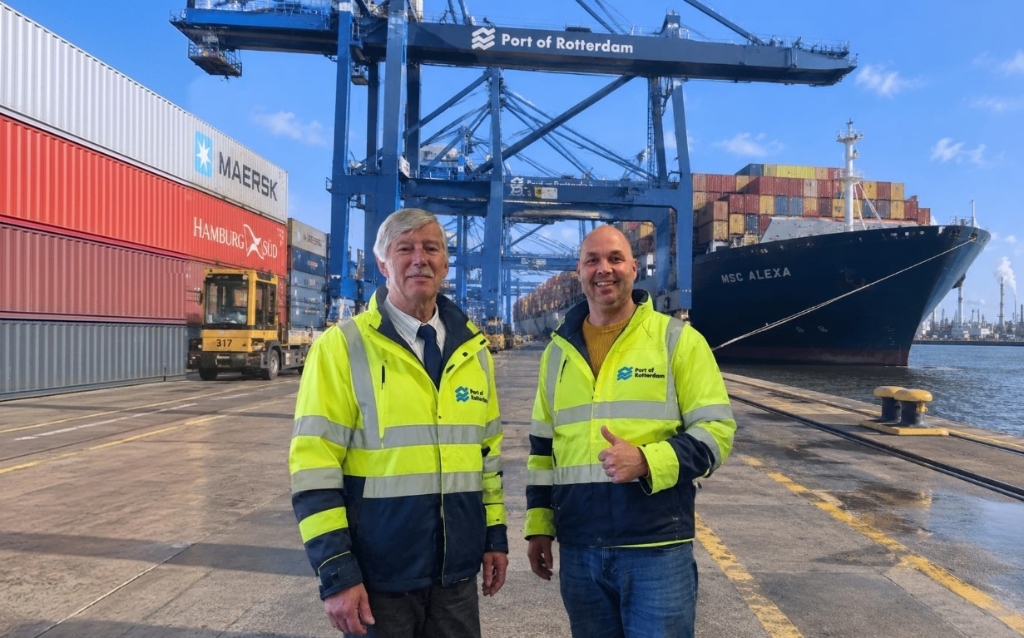

If you export from the Netherlands, Belgium or Germany to Brazil, Argentina, Uruguay or Paraguay, now is a good time to get ready. The EU–Mercosur interim Trade Agreement has entered into provisional application, gradually eliminating customs duties on over 91% of EU goods exports.
Key facts at a glance
The EU–Mercosur interim Trade Agreement (iTA) is provisionally applying as of 1 May 2026 across the 27 EU Member States and the four Mercosur nations: Argentina, Brazil, Paraguay, and Uruguay. The agreement gradually eliminates customs duties on over 91% of EU goods exports, generating more than €4 billion in annual tariff savings for European businesses and driving an estimated 39% increase in bilateral trade by 2040. Preferential origin is established through a statement on origin directly on commercial documents citing the exporter's REX number.
Legal architecture: what provisional application means
To allow businesses to benefit immediately from tariff reductions without waiting for multi-year national ratifications across 27 EU member states, the agreement was separated into an interim Trade Agreement (iTA) covering exclusive EU trade competencies and a broader Partnership Agreement (EMPA). Under EU Council authorization, the trade provisions took effect provisionally on 1 May 2026. European exporters can already clear cargo under preferential tariff rates at customs checkpoints in Argentina, Brazil, and Uruguay.
Which tariffs are being dismantled?
Mercosur has historically maintained high protective external tariffs under the Common External Tariff. Under the interim agreement, these barriers are being dismantled across key staging categories:
| Sector | Mercosur baseline tariffs | Under iTA | Staging timeline |
|---|---|---|---|
| Chemicals | Up to 18% | 0% for vast majority of industrial chemicals | Staged over 0 to 10 years; immediate cuts on key inputs |
| Machinery & mechanical appliances | 14% to 20% | 0% on 93% of EU exports | Phased over up to 10 years; first cuts applied on 1 May 2026 |
| Pharmaceuticals | Up to 14% | 0% on 90% of EU exports | 10-year transition; initial reductions active |
| Textiles & clothing | Up to 35% | 0% for 100% of EU exports | Phased over 8 years in equal annual cuts |
| Passenger cars | 35% | 0% at end of transition | Tariff quota with immediate 50% cut, full phase-out over 15–18 years |
| Agri-food & beverages | Up to 35% | 0% or duty-free quotas; protection for 344 European GIs | Staged over 0 to 15 years; GIs protected from day one |
Sources: European Commission Directorate-General for Trade, Factsheet on Provisional Application and Q&A.
Check your own HS code. Tariff phase-outs depend on your exact product classification under Mercosur's 8-digit NCM schedule. Consult your customs broker or Appendix 2-A-2 of the agreement text for your specific tariff line.
How STG Stevens helps you ship to Mercosur
We forward full containers (FCL) from the Port of Rotterdam to Santos, Paranaguá, Buenos Aires, Montevideo and other South American ports. Our Rotterdam documentation team verifies that export customs documentation, bills of lading, and origin declarations align with South American customs requirements before departure, preventing delays at destination terminals.
Read more: How we work
Frequently asked questions
Is the EU–Mercosur trade agreement in force?
Yes. The EU–Mercosur interim Trade Agreement (iTA) provisionally applies as of 1 May 2026. This allows European exporters to access reduced and eliminated tariffs immediately upon customs clearance in Argentina, Brazil, and Uruguay.
What is the difference between the interim Trade Agreement and the full Partnership Agreement?
The interim Trade Agreement (iTA) covers trade competencies under exclusive EU jurisdiction, allowing it to enter into provisional application once approved by the Council and Mercosur countries. The full EU–Mercosur Partnership Agreement (EMPA) includes broader political cooperation and will require national parliamentary ratification across EU Member States.
Which tariffs does Mercosur remove for EU exporters?
Duties will be eliminated on more than 91% of EU exports over phased transition periods. Tariffs on chemicals (up to 18%), machinery (14–20%), pharmaceuticals (up to 14%), and textiles (35%) are reduced immediately or phased out over periods of up to 10 years.
Can STG Stevens handle container shipping to Brazil and Mercosur?
Yes. We coordinate FCL container shipments from the Port of Rotterdam to major South American destinations, including Santos, Paranaguá, Buenos Aires, and Montevideo. Send your shipment details and we aim to respond within 1 business day.
Sources
- European Commission: EU–Mercosur trade deal: why it matters (overview and implementation details)
- European Commission press release: EU and Mercosur sign historic and ambitious partnership (17 January 2026)
- European Commission Daily News: EU-Mercosur interim trade deal to enter into provisional application (30 April 2026)
- European Commission: Questions and answers on the EU–Mercosur partnership agreement
- European Commission, DG Trade: Texts of the EU–Mercosur Interim Trade Agreement